
Hair loss can affect both men and women at different stages of life. Some people notice gradual thinning, a widening hair part, or a receding hairline, while others experience sudden or excessive shedding. Although some hair shedding is normal, ongoing or unexplained hair loss may require professional assessment.
Understanding the cause is the first step towards choosing an appropriate treatment. If you are considering hair loss treatment in Dubai, a dermatologist can assess your scalp, review your medical history, and determine whether tests or treatment may be helpful.
What Causes Hair Loss in Men and Women?
Hair loss can develop for several reasons. The pattern, speed, and location of hair loss often provide useful clues, but an examination may be needed to identify the cause.
1. Hereditary Hair Loss
Hereditary hair loss, also called androgenetic alopecia, is common in both men and women. In men, it may appear as a receding hairline or thinning at the crown. Women may notice a widening part or reduced hair density across the scalp.
This type of hair loss often develops gradually. Treatment may help slow further thinning or support regrowth in some people, depending on the stage and individual response.
2. Hormonal Changes and Medical Conditions
Hormonal changes related to pregnancy, childbirth, menopause, or certain medical conditions may affect the hair growth cycle. Thyroid disorders and conditions associated with hormonal imbalance, including polycystic ovary syndrome (PCOS), may also contribute to thinning.
Women experiencing irregular periods, acne, increased facial hair, or other hormonal symptoms alongside hair loss should discuss these concerns with a healthcare professional.
3. Stress, Illness, and Nutritional Deficiencies
Significant physical or emotional stress, major illness, surgery, rapid weight loss, and nutritional deficiencies can trigger increased shedding. This may become noticeable several weeks or months after the triggering event.
Low iron levels, inadequate protein intake, and certain other nutritional deficiencies may contribute to hair loss. However, supplements are not a universal solution; they are most appropriate when a deficiency has been identified.
4. Hair Care Practices and Scalp Conditions
Frequent heat styling, chemical treatments, and hairstyles that pull tightly on the hair can contribute to breakage or traction alopecia. Some scalp conditions, including inflammatory disorders and fungal infections, can also cause hair loss.
Sudden bald patches, scalp pain, redness, scaling, or visible scarring should be assessed promptly, as some causes may need early treatment to reduce the risk of permanent hair loss.
When Should You Seek Hair Loss Diagnosis in Dubai?
Consider consulting a dermatologist if you notice persistent thinning, excessive shedding, a widening part, a receding hairline, or unexplained bald patches.
An assessment is particularly important if hair loss develops suddenly or occurs alongside scalp inflammation, pain, or other new symptoms. Early evaluation may help identify treatable causes and guide the next steps.
How Is Hair Loss Diagnosed?
A hair loss diagnosis in Dubai generally begins with a consultation and examination. Not everyone needs extensive testing; the dermatologist will select investigations based on the symptoms and findings.
Medical History and Scalp Examination
The dermatologist may ask when the hair loss began, whether it is gradual or sudden, and whether there is a family history of thinning. They may also review recent illnesses, stress, diet, medications, hormonal changes, and hair care practices.
The scalp and hair are examined for the distribution of thinning, broken hairs, inflammation, and other visible changes.
Blood Tests
Blood tests may be recommended when the history or examination suggests an underlying medical cause. Depending on the individual, these may include tests for iron deficiency, thyroid function, or selected nutritional or hormonal concerns.
There is no single blood test that diagnoses every type of hair loss. The tests should be chosen according to the clinical assessment.
Hair-Pull Test and Scalp Examination Tools
A dermatologist may gently pull a small section of hair to assess active shedding. A magnifying instrument or dermatoscope may also help examine the scalp and hair follicles more closely.
Scalp Biopsy
In selected cases, a small scalp sample may be needed to investigate an unclear diagnosis or suspected inflammatory or scarring condition. A biopsy is not necessary for every patient. <Cite refs={[“turn990635search3″,”turn990635search5”]}/>
Hair Loss Treatment in Dubai: What Are the Options?
Treatment depends on the cause, the type of hair loss, medical history, and individual preferences. A dermatologist can explain which options are appropriate and discuss possible benefits, limitations, and risks.
1. Topical or Prescription Medication
Topical minoxidil may be recommended for certain types of hereditary hair loss. It requires consistent use, and any improvement may take several months. Results vary, and the benefits may not continue after treatment is stopped.
Other prescription medicines may be suitable for selected patients. Their use depends on the diagnosis, health history, potential side effects, and pregnancy-related considerations where relevant. Do not start or stop prescription treatment without appropriate medical advice.
2. Correcting Underlying Causes
If hair loss is associated with an identified nutritional deficiency, thyroid disorder, scalp infection, or another medical condition, treating that cause may help. A healthcare professional can advise whether medication, dietary changes, or further assessment is needed.
Avoid taking high-dose vitamins or supplements without guidance. Excess amounts of certain nutrients can be harmful, and supplementation may not help when no deficiency is present.
3. Platelet-Rich Plasma (PRP)
Platelet-rich plasma (PRP) involves preparing a component of a patient’s blood and injecting it into selected scalp areas. It may be considered for certain types of hair loss, but suitability and response vary.
A dermatologist should explain the available evidence, potential risks, expected treatment schedule, and limitations before you decide whether to proceed.
4. Low-Level Laser Therapy
Low-level laser devices are used in some hair-loss treatment plans. Evidence and response can vary by device and type of hair loss, and repeated sessions may be required. A consultation can help determine whether this approach is suitable.
5. Hair Transplantation
Hair transplantation may be an option for selected people with stable, suitable patterns of hair loss. It involves moving hair follicles from one area to another and requires assessment of donor hair, scalp health, and long-term hair-loss progression.
It is not suitable for every cause of hair loss, and outcomes cannot be guaranteed. A qualified specialist should explain candidacy, possible complications, recovery, and realistic expectations.
Female Hair Loss Treatment: What Should Women Know?
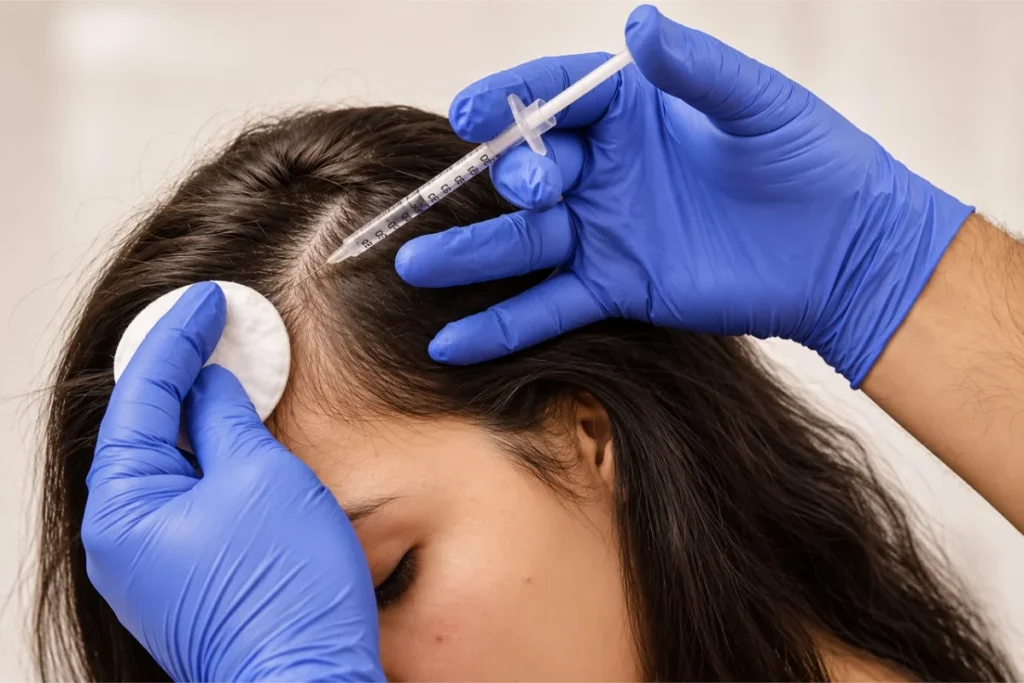
Female hair loss treatment depends on whether thinning is hereditary, related to hormonal changes, caused by temporary shedding, or associated with another condition.
Women who experience hair loss after childbirth or illness may have a different pattern from those with gradual hereditary thinning. A dermatologist can assess whether observation, medication, targeted tests, or referral to another healthcare professional is appropriate.
Women who are pregnant, breastfeeding, or planning pregnancy should discuss this with their doctor before using hair-loss medicines or undergoing procedures.
How Can You Support Healthy Hair at Home?
Healthy hair care habits may help reduce preventable damage, although they cannot treat every underlying cause of hair loss.
- Use gentle hair-care products and avoid excessive heat.
- Avoid hairstyles that place persistent tension on the scalp.
- Maintain a balanced diet with adequate protein and varied nutrients.
- Avoid crash diets and rapid weight-loss practices.
- Follow prescribed treatment instructions and attend recommended reviews.
- Be cautious of products promising guaranteed or unusually rapid hair regrowth.
Take note of when the shedding began and any changes in your health, medication, or routine. This information can help during your consultation.
Book a Hair Loss Consultation in Dubai
Hair loss can have several causes, and the right approach begins with understanding what is affecting your hair and scalp. If you are experiencing ongoing thinning or excessive shedding, consider consulting a qualified dermatologist in Dubai for an individual assessment.
A consultation can help determine whether diagnostic tests are needed and which treatment options may be appropriate for your condition.
Frequently Asked Questions
1. What is the best hair loss treatment in Dubai?
There is no single treatment that is best for everyone. The appropriate option depends on the cause, pattern of hair loss, medical history, and individual suitability. A dermatologist can recommend a plan after assessment.
2. What tests are needed to diagnose hair loss?
Depending on the findings, assessment may include a scalp examination, hair-pull test, blood tests, or occasionally a scalp biopsy. Not every patient needs all these tests.
3. Can hair thinning be reversed?
Some types of hair thinning may improve when the underlying cause is treated. Other types may be managed by slowing further loss or supporting regrowth. Outcomes depend on the diagnosis and individual response.
4. When should women seek treatment for hair loss?
Women should consider an assessment for persistent thinning, widening of the hair part, sudden shedding, or bald patches. Scalp pain, redness, or signs of scarring warrant prompt medical evaluation.
5. Do hair-loss supplements always work?
No. Supplements are most useful when they address a confirmed nutritional deficiency. Taking additional vitamins or minerals without a demonstrated need may be ineffective and can sometimes be harmful.
This article is for general educational purposes only and does not replace professional medical advice, diagnosis, or treatment.


